You press the button, the opener light comes on, you hear the motor run — and the door does not move. Or it moves an inch and stops. The motor is clearly doing something, which makes the problem feel like it should be simple, but "motor runs, door does not move" is a symptom with several possible causes, and they sit in different parts of the assembly. Some are inside the opener housing. Some are in the door's own hardware. Sorting out which is which is mostly a matter of observation, and it can save a homeowner from guessing — or from reaching for parts that are not the problem. This article covers what you can safely notice from outside the door with the garage empty, what each observation points toward, and which checks belong to a technician.
First, separate the two halves of the system
A garage door is two systems working together: the opener, which supplies the force, and the door itself, which rides on springs, cables, rollers, and track. When the motor runs but the door does not move, the fault is in one of those two halves or in the connection between them. The quickest way to narrow it down is to listen and watch for a few seconds during a normal cycle.
Two observations do most of the work here. Does the motor keep running for as long as you hold the button, or does it shut off after a few seconds? And does the door move at all — even a fraction of an inch — or does it stay completely still? Those two answers point in different directions, and you can gather both without touching any moving part.
When the motor runs and then shuts off
Many openers are built to stop the motor after a short run if they sense that the door is not traveling as expected. If the motor hums for a few seconds and then quits, the opener is likely receiving a signal that something is resisting it. That resistance can come from several places.
- The door's own springs or cables. A broken torsion spring cannot hold the door's weight, and the opener is not designed to lift that weight on its own. A snapped cable leaves the door hanging at an angle, and the opener will strain against it. A technician inspects the springs and cables to confirm which, if either, is involved.
- The track and rollers. A roller that has jumped the track, a bent section of track, or a hinge that has pulled loose can bind the door as it tries to travel. This is often visible from outside the door with the garage empty — a gap along the top, a tilt as the door starts to rise, or a section that sits out of line with its neighbors.
- The opener's force and travel settings. These settings tell the motor how much resistance to expect and how far to travel. If they have drifted, the opener may stop early even though the door is mechanically sound. Adjusting them is technician work, because the settings have to match the actual condition of the door.
Notice which of these fits what you are seeing. A door that sits crooked points toward the door hardware. A door that looks level but stops a few inches up points more toward the opener's settings or a binding track. The technician confirms which by inspecting the assembly directly.
When the motor runs and the door does not move at all
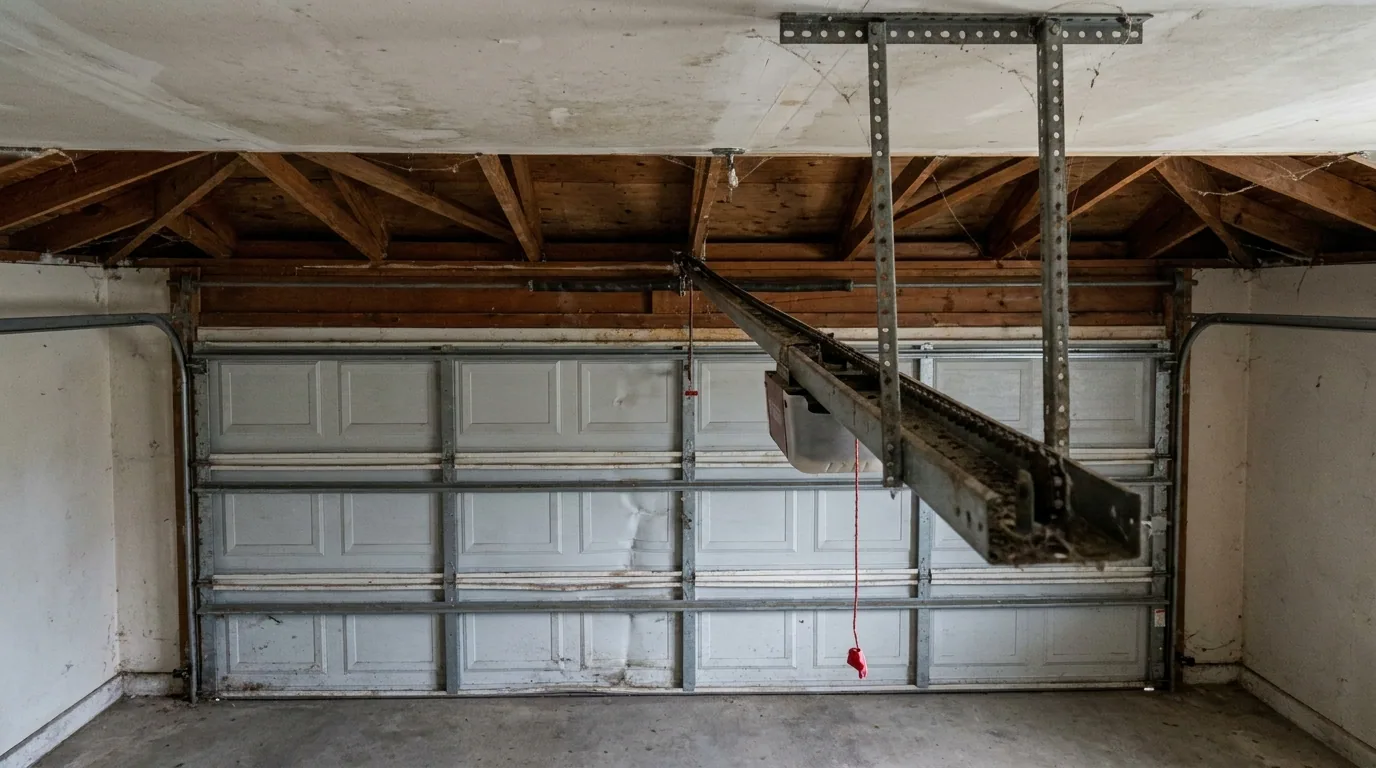
If the motor keeps running and the door stays completely still, the most likely explanation is a break in the link between the motor and the door. On a belt or chain drive opener, that link is the carriage that rides the rail and pulls the door. On a screw drive, it is the traveler. In either case, a stripped gear inside the opener is one common reason the motor turns without moving anything — the motor spins, but the drive does not engage.
A stripped gear is not the only possibility. The carriage can be disengaged from the rail, the drive belt or chain can be loose or broken, or the arm that connects the carriage to the door can have come free. A technician can tell these apart quickly by inspecting the opener's drive train and the door's connection point. None of that inspection is homeowner work — the drive train carries stored force, and the door's connection to it should only be checked by someone trained for it.
What you can do is note the sound. A motor that runs smoothly and quietly but moves nothing sounds different from a motor that is straining against a load. That distinction is useful information for the technician, and it costs nothing to gather.
What the door itself can tell you
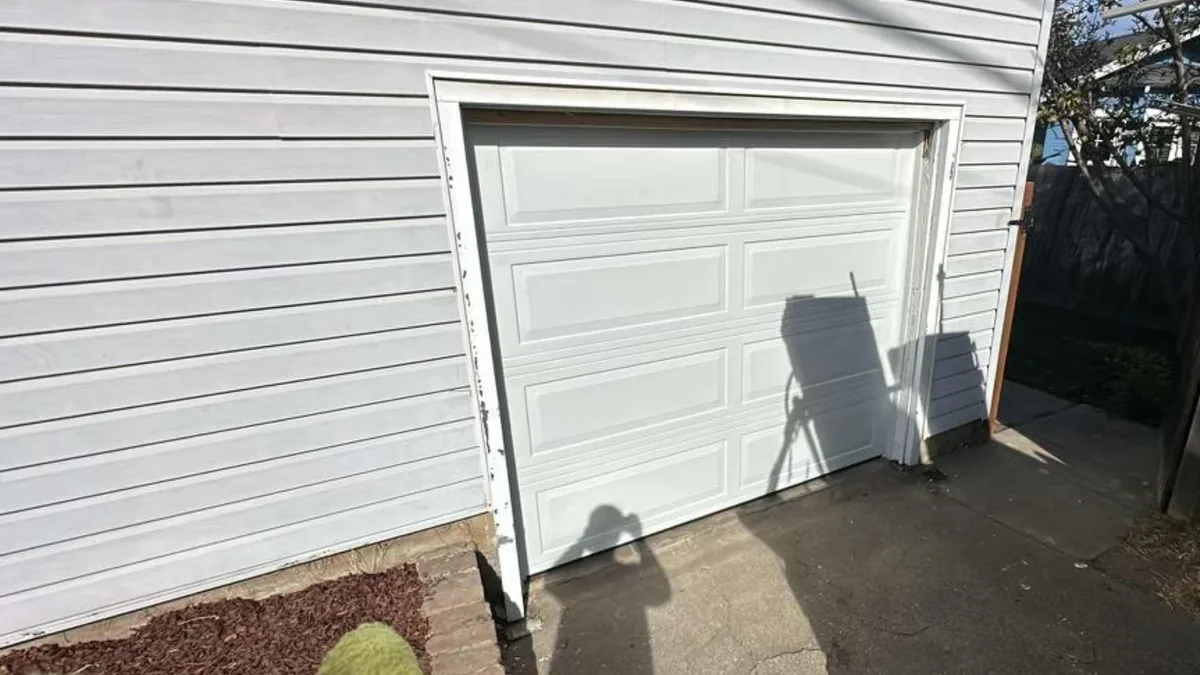
With the garage empty and the door closed, a few things are visible from outside without touching anything. A door that sits crooked — one side higher than the other — is a real signal and can mean a snapped cable, a broken spring, or a bent track. A visible gap along the top of the door, or a section that sits proud of its neighbors, can point to a track or hinge problem. And if the door feels heavier than usual when you use it normally, that is worth mentioning to the technician, because it suggests the springs are no longer carrying their share of the load.
What you should not do is lift the door by hand to test its weight, pull the emergency release and move the door, or reach for the springs or cables. Those parts hold stored energy, and the checks that involve them belong to a technician. The observation is enough to start the conversation.
When to call, and what to have ready
If the motor runs and the door does not move, the door is not safe to operate until the cause is identified. Leave it closed if you can, keep vehicles clear of the opening, and call a technician. DoorCore Garage Doors serves the Treasure Coast and can be reached at (561) 421-5760 or DoorCoreFL@gmail.com. The company is licensed and insured, and emergency service is available outside regular hours — weekdays 7:00 AM to 7:00 PM and Saturdays 8:00 AM to 5:00 PM.
Have a few details ready when you call: whether the motor keeps running or shuts off after a few seconds, whether the door moves at all, whether it sits level, and whether the sound changed recently. Those answers help the technician arrive with the right parts and the right plan, and they turn a frustrating morning into a repair that gets done in one visit.