When a garage door stops working, most homeowners call for a repair and expect the technician to fix the obvious problem. But a service visit is not just about replacing a broken part. It is a systematic check of the entire door system—springs, cables, rollers, track, hinges, and opener—to make sure everything works together safely. On the Treasure Coast, where salt air and storm season add stress, that full check matters even more. This article explains what a typical service includes, why the sequence matters, and what you can observe beforehand to help the visit go smoothly.
What the technician checks first
A good service starts with observation. The technician will run the door through a full cycle and watch how it moves. They are looking for the door sitting crooked, a gap along the top, or a door that feels heavier than usual when operated. They will also listen for new noises—a squeal at the start, a grinding sound, or a bang. These symptoms can point to several possible causes, and the technician uses them to narrow down where to look next.
For example, a door that hangs at an angle could mean a snapped cable, a broken spring, or a bent track. The technician will inspect the springs and cables directly—something homeowners should never do—to determine which it is. Similarly, a door that reverses before reaching the floor is usually a travel-limit or force-setting issue, not a photo-eye problem. The photo-eye only affects a door that is closing: if it is blocked or misaligned, it will reverse the door while it is going down. A door that will not start at all or stops short has a different cause.
Springs and cables: the load-bearing parts
Torsion springs and cables do the heavy lifting. A broken torsion spring cannot hold the door's weight, so the door may feel extremely heavy or not stay open. A snapped cable will cause the door to hang crooked. These are not parts a homeowner should touch—they are under high tension and can cause serious injury. The technician will inspect them for wear, corrosion, or breakage and replace them as needed. On the Treasure Coast, salt air can accelerate corrosion, so regular inspection is wise.
The technician will also check the drums and bearings that the cables wind around, and make sure the cables are properly seated. If a spring is replaced, the technician will adjust the tension to match the door's weight, which requires specialized tools and knowledge.
Rollers, hinges, and track
Rollers and hinges are smaller parts that have a big impact on how smoothly the door runs. Worn rollers can cause a squeal or a rumble; dry hinges can squeak. The technician will check each roller for flat spots or looseness and lubricate hinges and moving parts. The track is also inspected for bends, dents, or misalignment. A bent track can cause the door to bind or come off track, which is a repair that should be handled by a professional.
If the door is off track, the technician will carefully realign it and check that all rollers are seated properly. This is not a do-it-yourself job—the door can be unstable and dangerous to handle.
Opener and safety devices
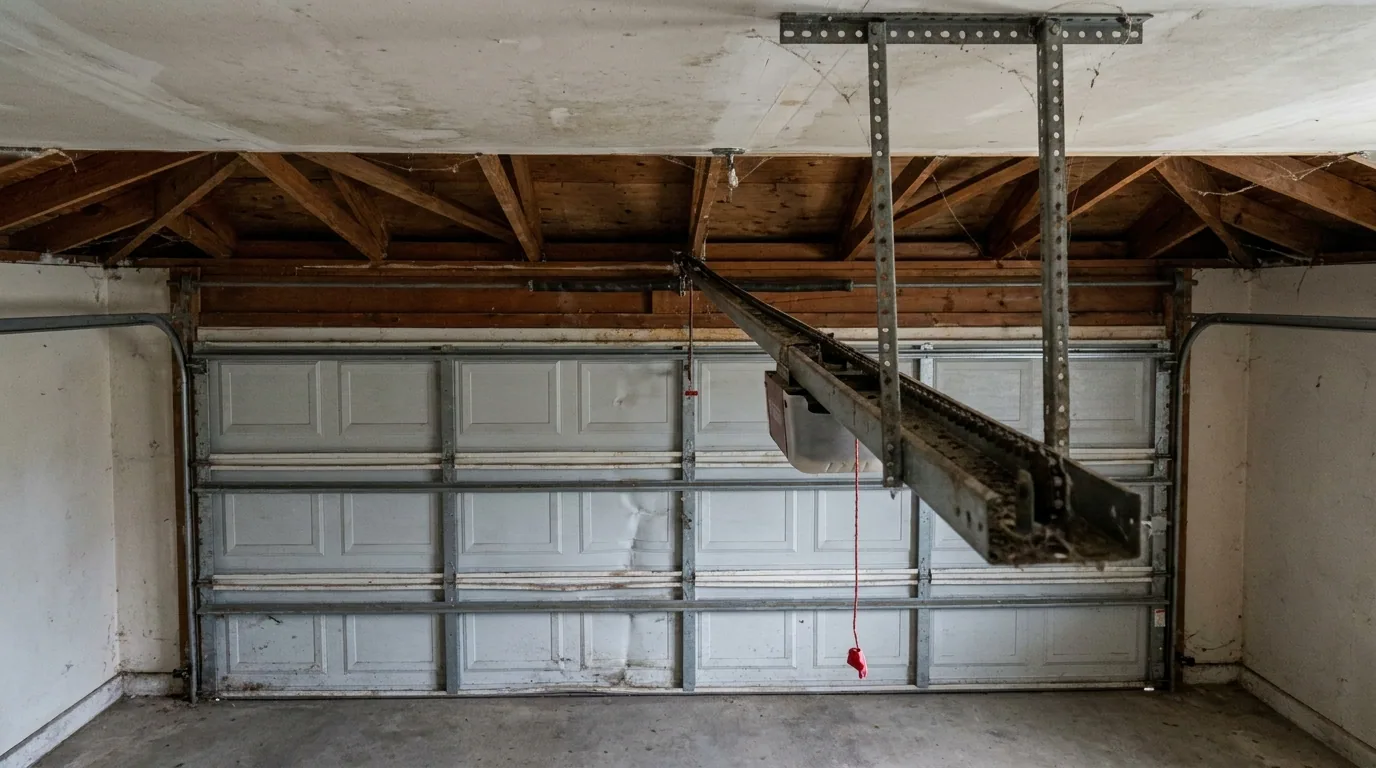
The opener is the motor that drives the door. The technician will test the opener's response to the remote and wall switch, check the drive belt or chain for wear, and listen for unusual noises. A common issue is a stripped gear, which lets the motor run without moving the door. The technician can diagnose this by listening and observing the carriage movement.
Safety devices are also tested. The photo-eye should reverse a closing door when blocked. The technician will align the sensors and test them. The force settings and travel limits are adjusted so the door opens and closes fully without straining. If the opener is a LiftMaster model, the technician may have specific parts and knowledge for that brand.
What you can do before the visit
You can help the service go faster by noting a few things: when the problem started, what it sounds like, and whether it happens every time or only sometimes. Clear the area around the door so the technician has room to work. If the door is completely stuck, do not force it—call for service. DoorCore Garage Doors serves the Treasure Coast and can be reached at (561) 421-5760. They are licensed and insured, and offer emergency service.
Remember, never attempt to adjust springs, cables, or the opener drive train yourself. Those are jobs for a trained technician. By understanding what a service includes, you can make sure your door gets the complete care it needs.