A garage door is the largest opening in most Florida homes, and during a hurricane it is usually the first part of the building to be tested. Wind does not simply push on the door. It creates pressure differences between the inside of the garage and the outside, and the door has to resist both. When a door fails, the garage becomes an open face on the structure, and the pressure that follows can affect the roof and the walls attached to it. This article explains what actually happens to a door in high wind, what you can safely inspect yourself before a storm, and which parts of the assembly should only be touched by a technician.
How Wind Loads a Garage Door
In a hurricane, the door is loaded in two directions. Positive pressure pushes the door inward toward the garage. Negative pressure — suction created as wind moves across the opening — pulls it outward. A door that is not rated for the load can bow inward at the center, and once a panel bows far enough it can crack, tear free of the track, or let go entirely. The wider the door, the more area the wind has to work on, and the more the center of each panel deflects.
Wind-driven rain and debris add a second problem. A door that is holding pressure but leaking at the bottom seal lets water into the garage, and a door that has lost a panel or a section of track is no longer a barrier at all. This is why impact-rated doors are built around both the panel strength and the reinforcement that ties the door to the building.
What You Can Check Before Storm Season
Most of the inspection is visual and can be done from the floor with the door closed. Work through these in order.
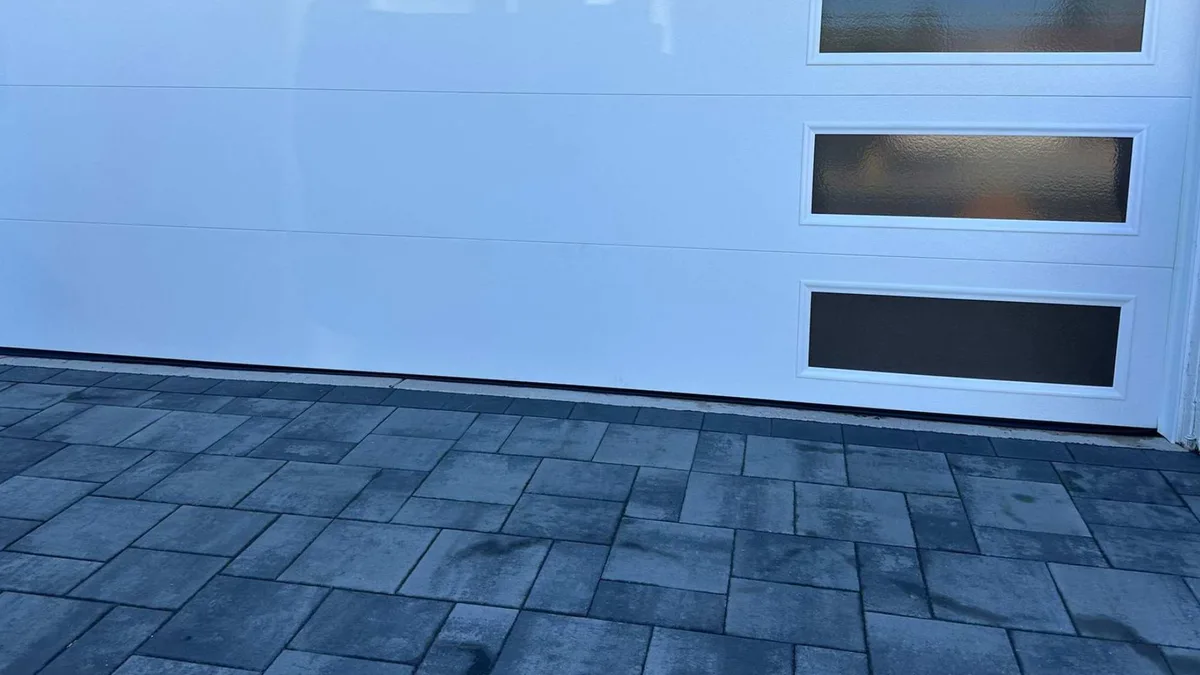
- The bottom seal. Look along the full width of the door where it meets the floor. A seal that is flattened, torn, or separated leaves a gap that lets wind-driven rain in and lets pressure equalize under the door.
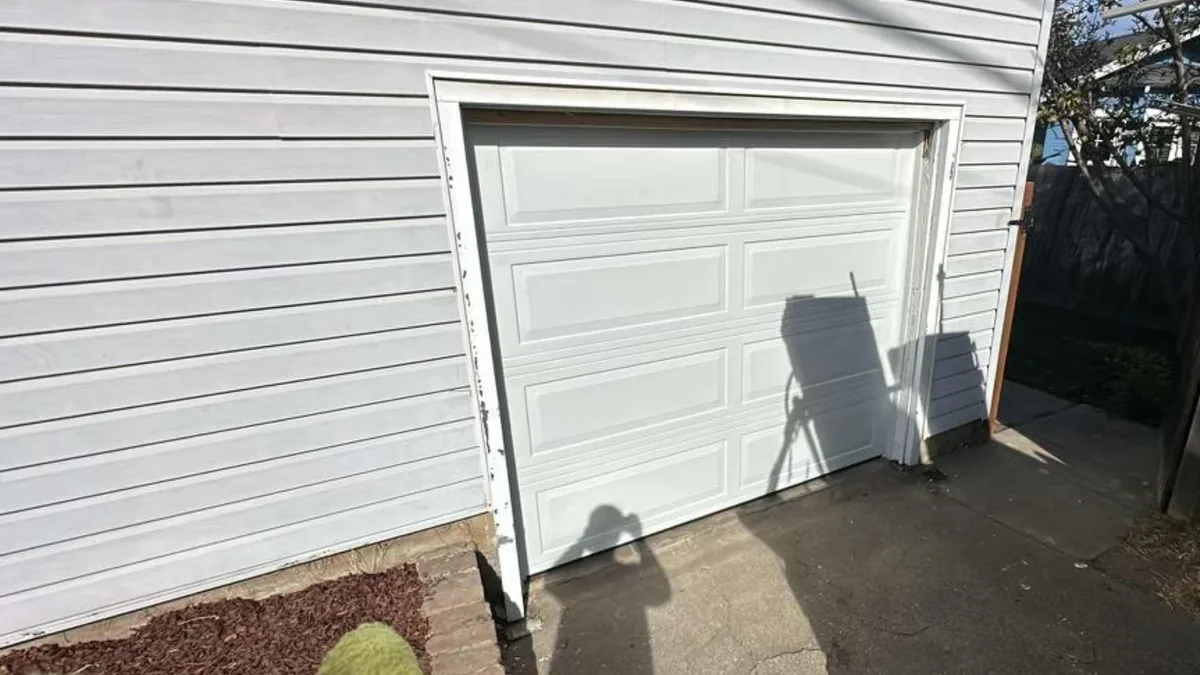
- Panel condition. Look for dents, cracks, and separation at the seams between sections. A crack in a panel is a starting point for failure under load.
- The tracks. Check that the horizontal tracks on both sides run parallel and that the vertical tracks are straight. Look at the brackets anchoring the track to the wall for pulled fasteners, bent steel, or rust.
- The hinges and rollers. Look for cracked hinges, missing screws, and rollers that are worn flat or have come out of the track.
- The label. Many impact-rated doors carry a rating label or a permanent marking on the door or the frame. If you can find it, note what it says. If you cannot, that is worth knowing before a storm rather than during one.
If you find damage on any of these, have it looked at before the season rather than after a warning is issued. Repair work tends to be harder to schedule once a storm is in the forecast.
What a Hurricane Actually Does to a Failing Door
A door that is already compromised behaves differently from one that is sound. A door with a bent track can jump the track under load. A door with a weakened panel can bow at the center and stay bowed. A door with a loose bottom seal lets water in and can allow pressure to build under the door. A door with a failing spring is already relying on the opener to move it, and an opener is not built to hold a door against wind load.
If your door has a snapped cable, a broken spring, or a section that has come out of the track, do not operate it and do not try to brace it yourself. Those parts are under tension and can cause serious injury. Call a technician. DoorCore Garage Doors serves the Treasure Coast and can be reached at (561) 421-5760.
The Parts You Should Not Touch
Torsion springs, cables, and the opener drive train are the three areas where a homeowner should stop. A torsion spring stores enough energy to move a door weighing hundreds of pounds, and a cable under load can whip when it releases. Do not attempt to adjust, lubricate, or remove either one. Do not try to straighten a bent track with the door attached. Do not disconnect the opener and lift the door by hand to test it if a spring or cable is suspect.
What you can do is keep the door clear, keep the area under the tracks free of stored items, and note what you observe so a technician has a clear description when you call.
Preparing the Door for a Storm
Before a storm arrives, close the door fully and confirm it is seated against the floor. Check that the photo-eye sensors at the bottom of the tracks are aligned and unobstructed — a misaligned or blocked photo-eye reverses the door, and a door that reverses will not stay closed. Clear the garage floor of anything that could become a projectile if water or wind gets in. If your door is impact-rated, confirm the rating and follow any manufacturer instructions that came with it. If it is not rated, a technician can tell you what your options are for the opening.
After the storm passes, inspect the door from the floor before operating it. Look for panels that are bowed or cracked, tracks that are bent or separated from the wall, and cables that are slack or hanging. If anything looks wrong, leave the door closed and call for service. DoorCore Garage Doors offers emergency service and is licensed and insured. The office is at 997 SE Albatross Ave, Port St. Lucie, FL 34983, and weekday hours are 7:00 AM to 7:00 PM with Saturday hours from 8:00 AM to 5:00 PM. Service areas include Port St. Lucie, Fort Pierce, Stuart, Jensen Beach, Palm City, Hobe Sound, Vero Beach, and Sebastian. Email is DoorCoreFL@gmail.com.