If your garage door suddenly feels heavy, won't stay open, or makes a sharp bang from inside the garage, the springs are often the first suspect. Springs counterbalance the door's weight, making it possible to lift and lower smoothly. Before you call a technician, it helps to know which type of spring system you have. This article explains how to tell the difference between torsion and extension springs, what each does, and why you should never attempt to adjust or replace them yourself.
What Springs Do and Why They Matter
Garage door springs are under extreme tension. They store energy when the door closes and release it when the door opens, effectively canceling out most of the door's weight. Without working springs, the door becomes very heavy and difficult to lift manually. That weight is why a broken spring can make the door nearly impossible to lift—and why the opener, if forced to do all the work, may burn out or strip its gears.
There are two main types of spring systems: torsion and extension. Each has distinct characteristics and maintenance needs.
How to Tell Which Spring System You Have
You can usually identify your spring type with a quick visual inspection from the ground—no touching required. Look above the door or along the horizontal tracks.
Torsion Springs
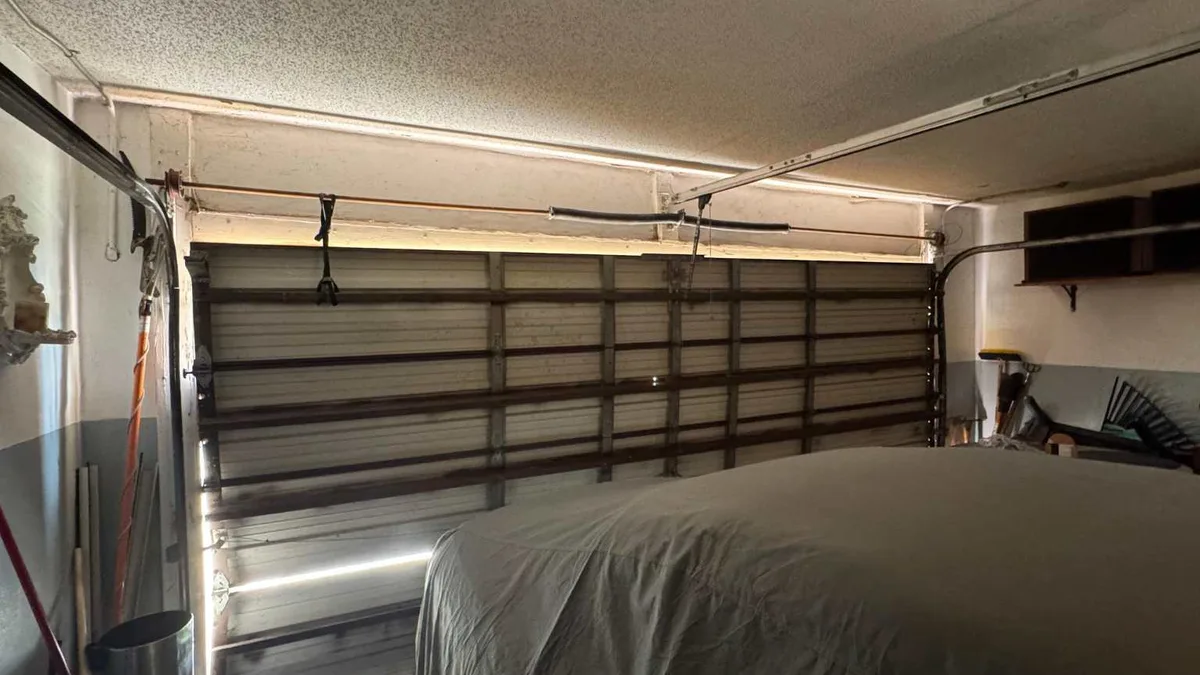
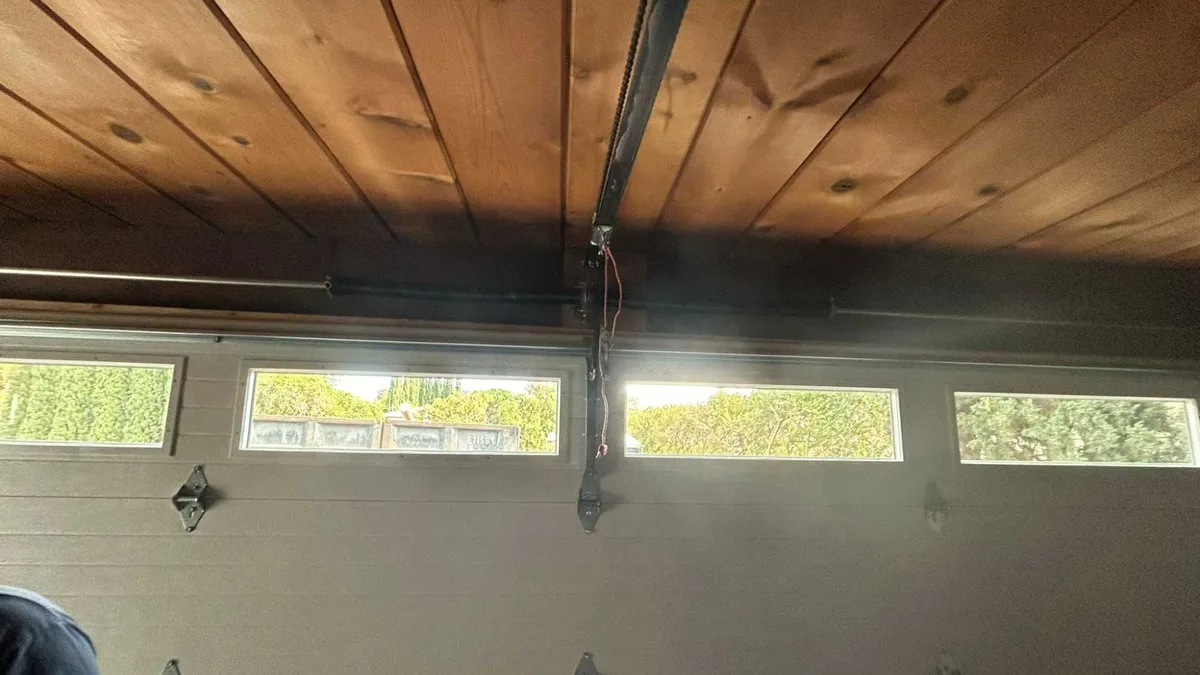
Torsion springs are mounted on a metal shaft above the closed door, running parallel to the header. They are tightly wound coils, usually black or dark gray, and you'll see a cable drum at each end of the shaft. When the door operates, the springs wind and unwind, turning the shaft. Torsion systems often have one or two springs.
Extension Springs
Extension springs stretch along the horizontal tracks on each side of the door, running from the rear track hanger to the front. They look like long, stretched coils and are usually lighter in color. When the door closes, these springs stretch; when it opens, they contract.
If you see springs above the door on a shaft, it's torsion. If you see springs stretching along the tracks on the sides, it's extension.
Key Differences That Affect Maintenance and Safety
Both systems do the same job, but their failure modes and maintenance needs differ.
- Torsion springs are more compact and less visible. However, they require precise adjustment and are under high torque. A broken torsion spring often makes a loud bang and leaves the door stuck. Because they are mounted on a shaft under tension, they are especially dangerous to work on without proper tools and training.
- Extension springs are more exposed to dust and debris. They also stretch over time, which can cause the door to become unbalanced. If an extension spring breaks, it can snap violently. Even with safety cables, the force can cause injury if someone is nearby.
In either case, springs are under tremendous tension. Never attempt to loosen, adjust, or remove them yourself. Only a trained technician should handle spring repairs or replacements.
Signs Your Springs Need Attention
Springs don't last forever. Watch for these warning signs:
- The door feels unusually heavy when you try to lift it manually. Do not disconnect the opener yourself; if you suspect a problem, call a technician.
- The door opens a few inches and stops, or won't stay open on its own.
- You hear a loud bang from the garage—often a sign of a broken spring.
- The door appears crooked or uneven when opening or closing.
- You notice a gap in the spring coil or see a stretched, deformed extension spring.
- The opener strains or the motor runs but the door doesn't move smoothly.
If you see any of these, stop using the door and call a professional. Continuing to operate it can damage the opener, the door panels, or the tracks—and it's unsafe.
Why You Shouldn't Replace Springs Yourself
Spring replacement requires specialized tools, such as winding bars for torsion springs, and a thorough understanding of counterbalance systems. The tension stored in a spring can release suddenly and with deadly force. Even experienced DIYers should not attempt it. Additionally, improper installation can lead to premature failure, door damage, or personal injury.
A licensed and insured technician has the training and equipment to safely replace springs, balance the door, and test all safety features. For commercial property owners, keeping loading docks and parking garages operating safely often depends on addressing spring issues before they cause a breakdown.
When to Call a Professional
If you suspect a spring problem—or if your door is noisy, won't close properly, or has stopped working—contact a qualified garage door company. DoorCore Garage Doors serves homeowners and small commercial property owners across Port St. Lucie, Fort Pierce, Stuart, Jensen Beach, Palm City, Hobe Sound, Vero Beach, and Sebastian. Our technicians can diagnose your spring system, perform safe repairs, and help you prepare your door for storm season. Call (561) 421-5760 or email DoorCoreFL@gmail.com to schedule service. We're available Monday through Friday from 7:00 AM to 7:00 PM, Saturday from 8:00 AM to 5:00 PM, with emergency service available.