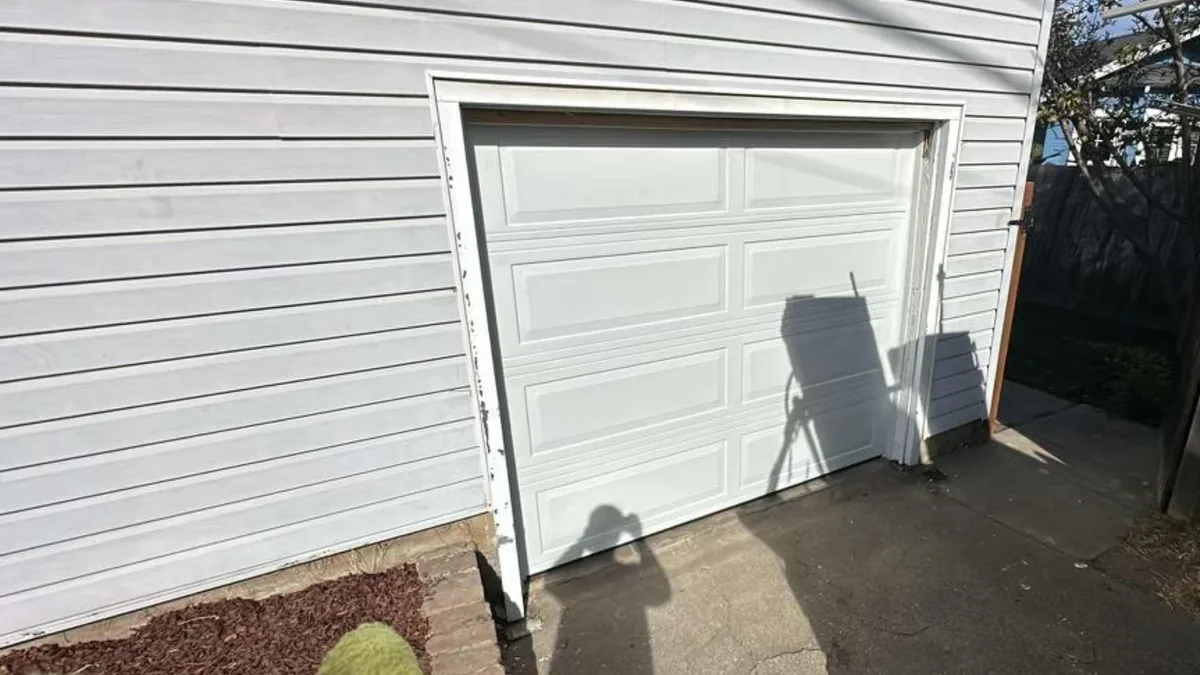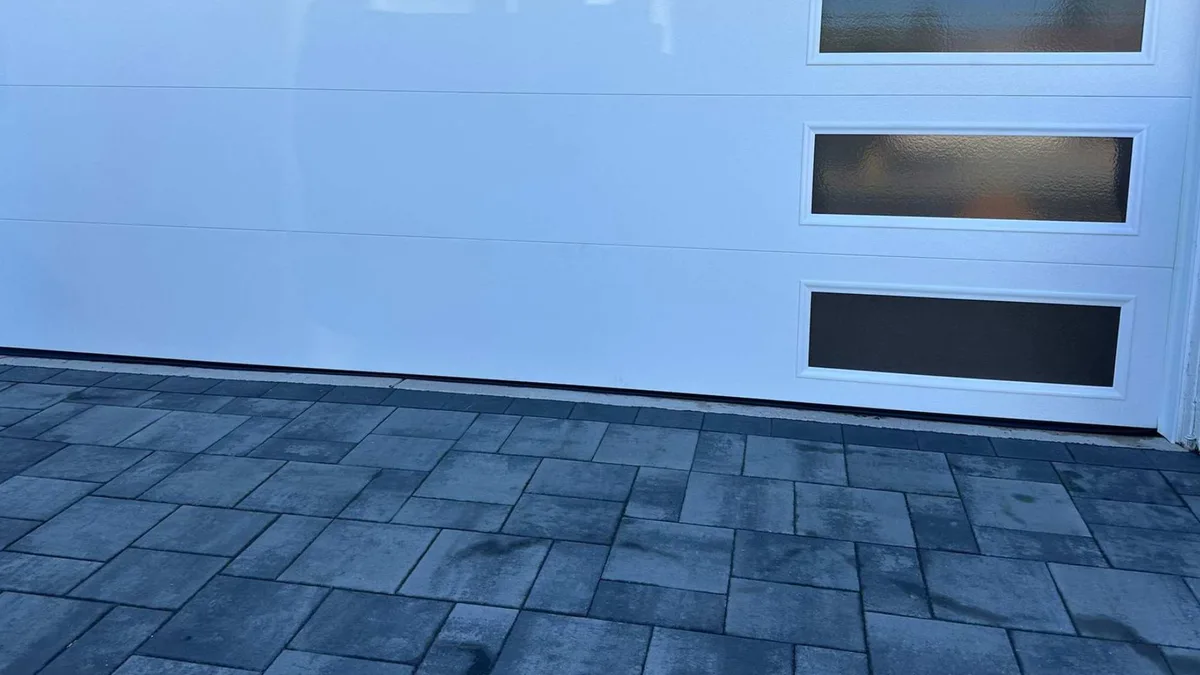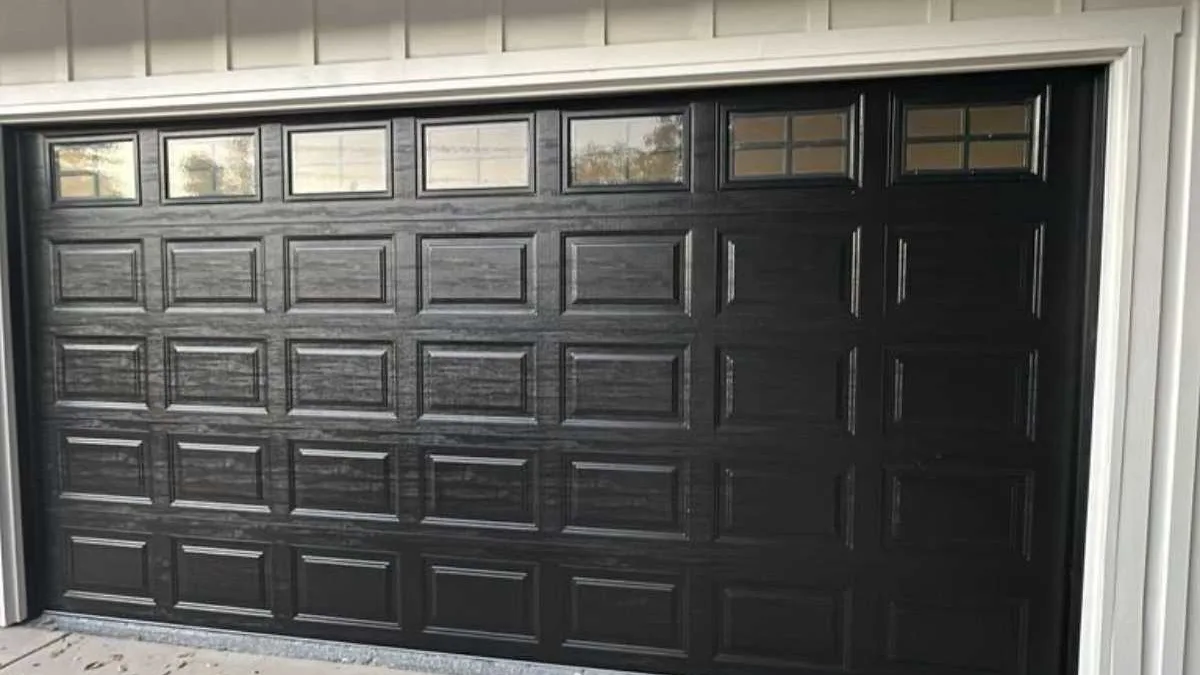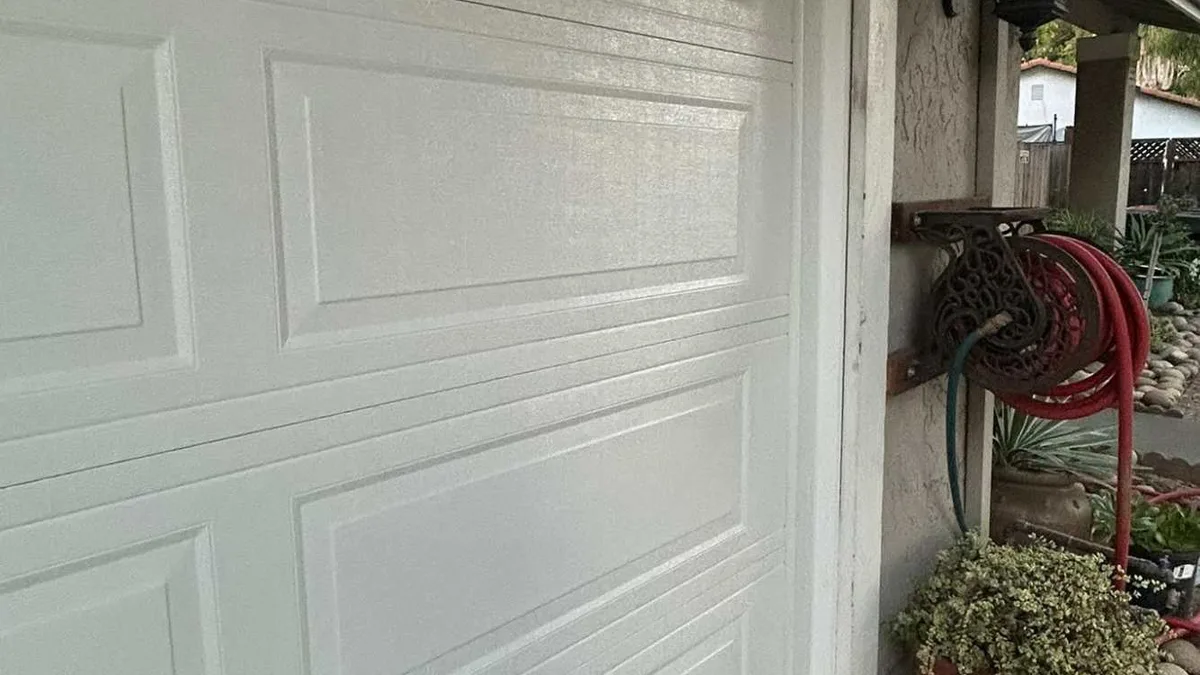
When a garage door takes a hit — a car nudged too far forward, a stray branch, a panel creased by wind — the first question most homeowners ask is whether the whole door has to go. Often it does not. A sectional garage door is built from separate panels joined by hinges, and in many cases one damaged section can be replaced on its own. But "often" is not "always," and the decision turns on a few specific things: whether the panel is still available, how the damage affects the structure of the door, and what condition the rest of the assembly is in. This article walks through what a homeowner can observe from outside the door with the garage empty, what each observation suggests, and where a technician's judgment is needed.
What a single panel replacement actually involves
A sectional door is a stack of horizontal panels. Each panel spans the width of the opening, and the panels are connected to each other by hinges that also carry the rollers running in the track. Replacing one panel means removing the damaged section, sliding a matching section into its place, and reconnecting the hinges and rollers so the door travels as a unit again.
The catch is fit. Panels are manufactured to a specific profile, width, and color, and they have to match the sections above and below them or the door will not sit flush or seal properly. If the door is older, or was installed by a manufacturer whose line has changed, a matching panel may not be available. In that case the options narrow: replace a larger set of sections so the seams line up, or replace the door.
There is also the question of what the damage did beneath the surface. A dent that looks cosmetic from the driveway can leave a hinge or roller bracket bent, and a panel that is replaced without addressing that will not track correctly. A technician checks the hinges, rollers, and track at the damaged section as part of the job, not as an afterthought.
Signs a single panel is the right call
Panel replacement tends to make sense when the damage is confined and the rest of the door is sound. From outside the door with the garage empty, a homeowner can note a few things:
- The door still sits level across the opening, with no visible tilt to one side.
- The gap along the top and sides of the closed door is even, not wider at one corner.
- The door runs through its cycle without a new hesitation, scrape, or repeated clunk at the same point.
- The damage is limited to one section, with the sections above and below it intact.
If those hold, a single panel is worth pursuing. If the door sits crooked, hangs at an angle, or has developed a gap that was not there before, the problem is likely broader than the panel, and replacing one section will not correct it. A door that hangs at an angle can point to a snapped cable, a broken spring, or a bent track — three different causes that require different tests, and all of them technician work.
When the whole door is the better answer
Full replacement becomes the practical choice in several situations. The most common is age and parts availability: if the panel profile is discontinued, a matching section may simply not exist. Another is widespread damage — multiple sections dented or creased, or a door that has been struck hard enough that the track and hardware are affected along its length. A third is a door that has reached the end of its service life and is developing problems in several places at once: repeated repairs on a door that is already worn rarely add up to a sound result.
There is also the storm question. On the Treasure Coast, a garage door is part of the building envelope, and its rating matters. If an older door is not impact rated and the goal is to bring the opening up to a storm-ready standard, replacing sections piecemeal does not get you there — the rating belongs to the door assembly, not to an individual panel swapped into an older frame. That is a conversation to have with a technician who can look at what is actually installed.
What to check before deciding
Before committing to either path, a few things are worth establishing. The door's make and model, if it is marked anywhere on the panels or frame, tells a technician whether a matching section is still produced. The number of sections damaged, and whether the damage is cosmetic or has deformed the panel's structure, affects whether a swap is viable. And the condition of the springs, cables, rollers, and track determines whether new panels are going onto a healthy assembly or a tired one.
That last part is not a homeowner check. Springs and cables are under tension and belong to a technician; the same goes for anything involving the opener drive train. What a homeowner can do is note what the door does in normal use — whether it feels heavier than it used to, whether it sits level, whether a new noise has appeared at the start of a cycle — and pass those observations along.
Getting it looked at
Panel versus whole-door is a judgment call that depends on the specific door in front of you, and it is one a technician can make quickly once the assembly has been inspected. DoorCore Garage Doors serves homeowners and commercial property owners across the Treasure Coast, including Port St. Lucie, Fort Pierce, Stuart, Jensen Beach, Palm City, Hobe Sound, Vero Beach, and Sebastian. The company is licensed and insured, handles both residential and commercial garage door repair, and offers emergency service. To talk through a damaged panel or a door that has stopped behaving, call (561) 421-5760 or email DoorCoreFL@gmail.com. The shop is at 997 SE Albatross Ave, Port St. Lucie, FL 34983, with weekday hours of 7:00 AM to 7:00 PM and Saturday hours of 8:00 AM to 5:00 PM.