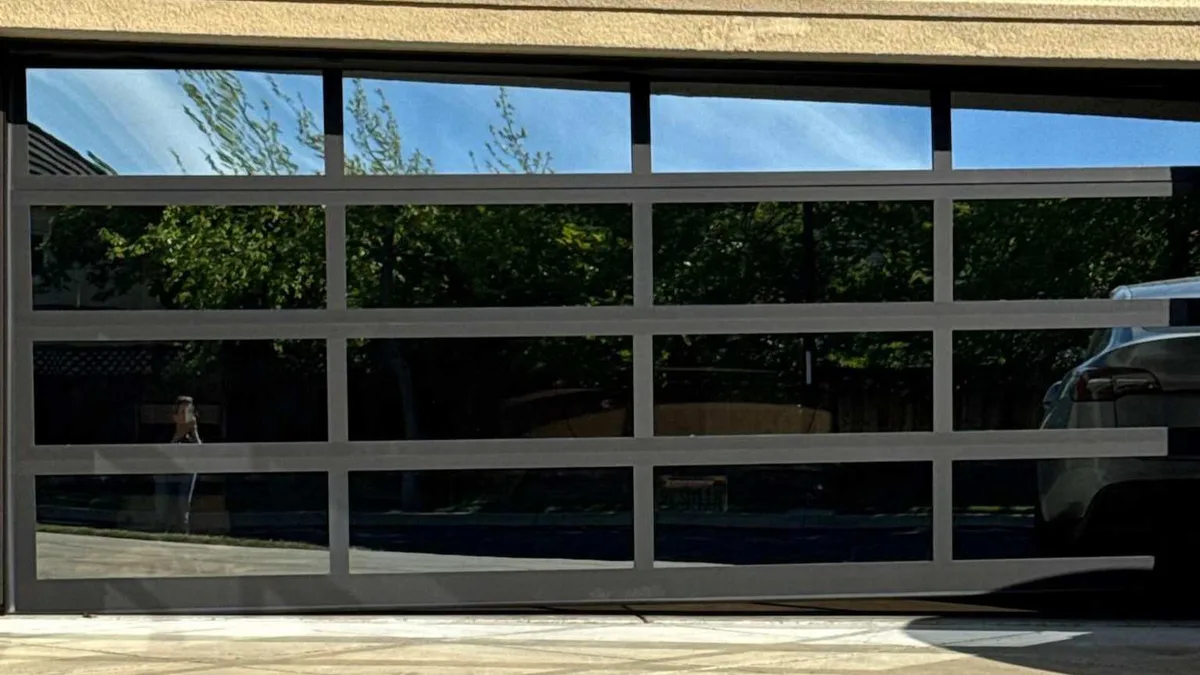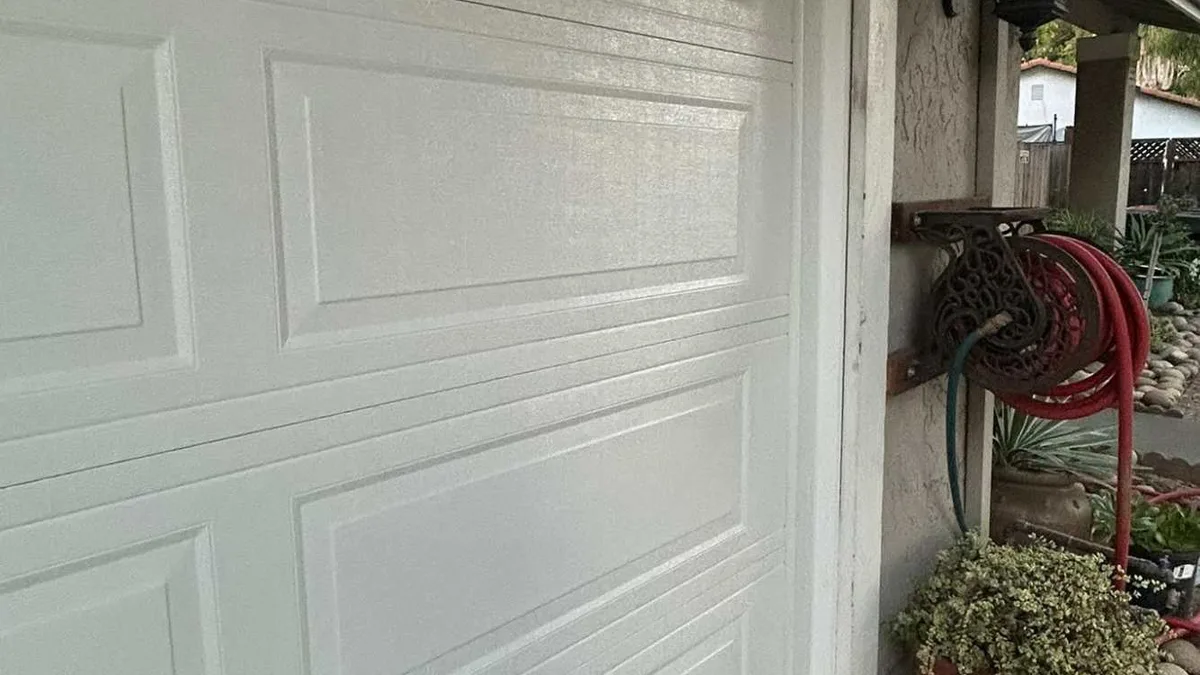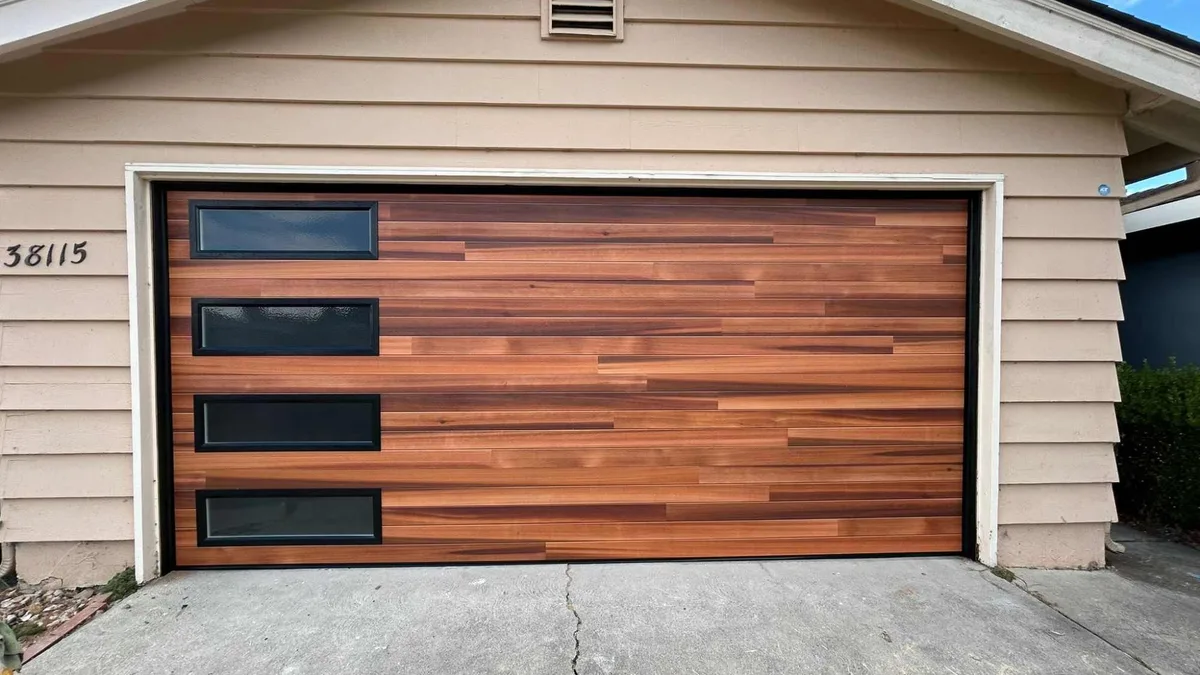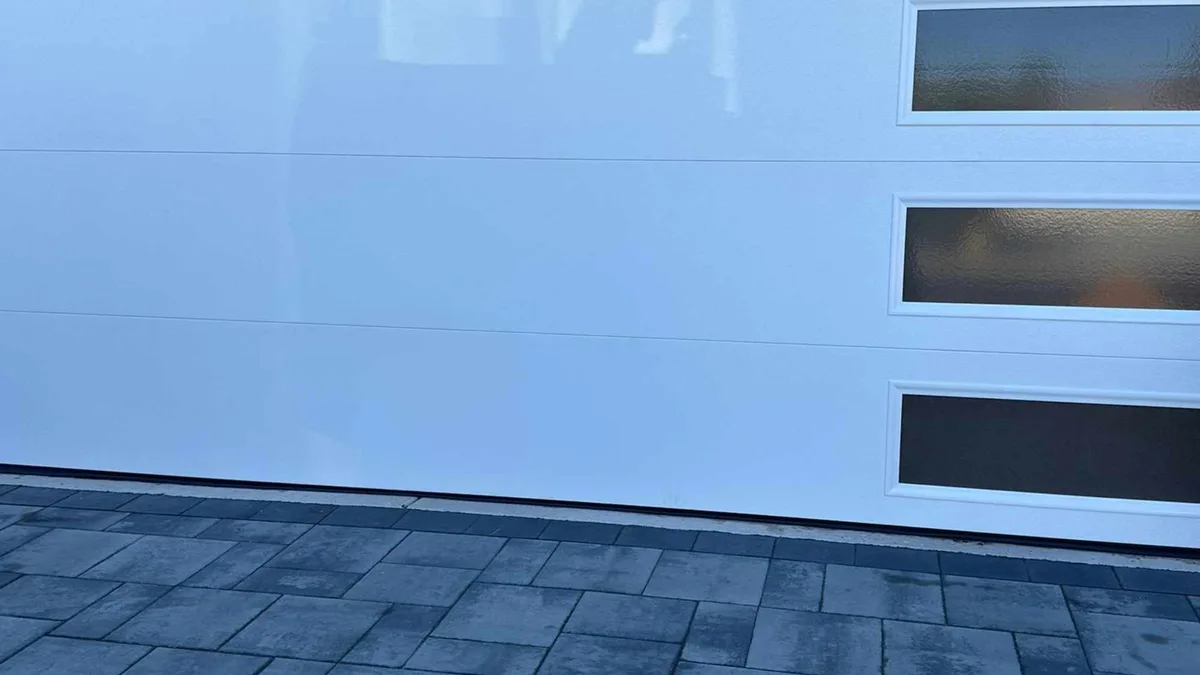
A garage door that has stopped working leaves you with a practical question: can this be fixed, or does it need to be replaced? The answer usually comes down to which part failed, how much of the assembly is affected, and whether the door itself is still sound. Most problems are repairable. A door that will not lift, hangs crooked, reverses on its own, or makes noise is usually telling you about one or two specific components, not the whole door. This article walks through what you can safely observe from the floor, what each symptom points to, and where the line between repair and replacement usually falls.
Start With What You Can See From the Floor
Look at the door in the closed position and read the door itself, not the motor. Stand back and check whether the bottom edge sits level with the floor across its full width. Look at the horizontal tracks on both sides and see whether they run parallel to each other. Look at the cables that run down each side and check whether either one is slack, kinked, or hanging loose. Look at the panels for dents, cracks, or separation at the seams, and at the brackets that anchor the track to the wall for pulled fasteners or bent steel.
These observations separate two broad categories. If the door sits level and the panels are intact but nothing moves, the fault is likely in the opener, the springs, or the power supply. If the door sits crooked, a cable is slack, or a panel is visibly damaged, the fault is in the door's mechanical balance or its structure. That distinction determines the next step.
Symptoms That Usually Point to a Repair
Several common failures are mechanical and isolated. Each has a clear cause and a clear fix.
- The door will not lift, and the opener hums or clicks. A broken torsion spring cannot hold the door's weight, and it cannot lift it either. The door may hang level but feel immovable, or the opener may strain and stop. Spring work belongs to a technician. Do not disconnect the opener and try to lift the door yourself to test it; a door whose weight is no longer supported by its spring can come down hard, and the spring assembly itself stores enough energy to injure someone who has not been trained on it.
- The door hangs at an angle, or one side sags. A snapped cable lets one side of the door drop out of balance. The door hangs crooked because the drum on that side is no longer being held. Do not operate the door in this condition. Call for service.
- The motor runs but the door does not move. A stripped gear inside the opener lets the motor spin without turning the drive. This is an opener repair, not a door problem.
- The door reverses before it reaches the floor. A misaligned or blocked photo-eye reverses the door as a safety response. Check whether something is in the beam path and whether the sensor lenses are dirty or knocked out of alignment. That is a safe check from the floor.
- The door squeals or grinds as it travels. A dry steel roller on the track will squeal. A worn roller or a bent track will grind. Both are repairable, and both are worth addressing before they wear the door further.
- A panel is dented but the door still operates. Dent and panel repair can restore a door that is structurally sound. Cosmetic damage alone is not a reason to replace.
Noise that comes and goes is a different case. A door that is louder at some times than others can have several causes, and picking one without checking is a guess. The useful move is to note when it happens and whether the sound comes from the track, the rollers, or the motor housing, then let a technician separate them.
Symptoms That Suggest Replacement Is Worth Considering
Replacement becomes the more sensible option when the damage is not isolated to one part. A door with multiple cracked or separated panels, a bent track that has pulled its anchors from the wall, or a door that has come off track and twisted the panels is often past the point where repair makes sense. The same is true of a door whose hardware is worn throughout, with rollers, hinges, and bearings all at the end of their life at once, because the repair becomes a rebuild.
Age matters too, but not as a number on its own. A door that has been repaired repeatedly in a short span is telling you something about the condition of the assembly as a whole. If you are facing a third repair in a year, ask the technician whether the remaining components are close behind.
On the Treasure Coast, storm readiness belongs in this conversation. If your current door was never rated for wind load, or if the rating cannot be confirmed because the label is gone and the reinforcement is missing, replacing it with a hurricane impact rated door is a decision about the building, not just the door. That is a different question from whether the door can be fixed, which it usually can, but it is worth asking at the same time.
What a Technician Will Check That You Should Not
The checks that decide repair versus replacement mostly happen above the floor and inside the torsion system. A technician will measure spring tension and check the winding on both sides, inspect the drums and cables at the top corners, test the door's balance with the opener disconnected, and check the track for alignment and anchor integrity. These are the checks that tell you whether the door is sound enough to justify a repair.
Do not attempt to adjust, unwind, or remove torsion springs or cables yourself, and do not reach into the opener's drive train. The energy stored in a wound spring is not proportional to how still it looks. If a cable is slack or the door is crooked, keep it closed and leave it alone until someone qualified has looked at it.
Getting a Straight Answer
If you are in Port St. Lucie, Fort Pierce, Stuart, Jensen Beach, Palm City, Hobe Sound, Vero Beach, or Sebastian and you are not sure which side of the line your door is on, describe the symptoms when you call. DoorCore Garage Doors handles residential and commercial garage door repair and replacement across the Treasure Coast, and the company is licensed and insured. Reach them at (561) 421-5760 or DoorCoreFL@gmail.com. Weekday hours are 7:00 AM to 7:00 PM, Saturday 8:00 AM to 5:00 PM, with emergency service available. A technician can tell you what failed, what can be repaired, and what the door's overall condition means for the decision.